
Last Updated: November 26, 2026
Quick Summary
Ramp gate alternatives for utility trailers include slide-in ramps, bi-fold gates, split gates, bolt-on steps, and spring-assist kits. Slide-in ramps suit wheeled equipment, steps suit hand-loaded cargo, and a spring-assist kit is the cheapest fix for a gate that is too heavy to lift.
- Slide-in ramps are removable sections that stow in a rack or against the side rail.
- A bi-fold gate folds to roughly half its deployed length but still hangs off the rear.
- A spring-assist gate kit is the cheapest path for a gate that is too heavy.
- Payload capacity is GVWR minus curb weight, so rear access weight counts against it.
- Position a loaded machine's center of gravity slightly forward of the trailer axles.
Table of Contents
- Why Owners Look for Ramp Gate Alternatives
- Slide-In Trailer Ramps: Removable Loading Without a Full Gate
- Bi-Fold Trailer Ramp: Half the Footprint, Same Loading Angle
- Utility Trailer Steps: Safer Access for People and Equipment
- Utility Trailer Gate Replacement: Retrofits, Spring Assists, and Split Gates
- Payload, Axle, and Tongue Weight: What Rear Access Adds to the Load
- Dimensions, Traction, and Storage: Matching a Ramp to Your Trailer
- Choosing Your Rear Access Setup at DoubleTake Trailer Sales
- Frequently Asked Questions
Why Owners Look for Ramp Gate Alternatives
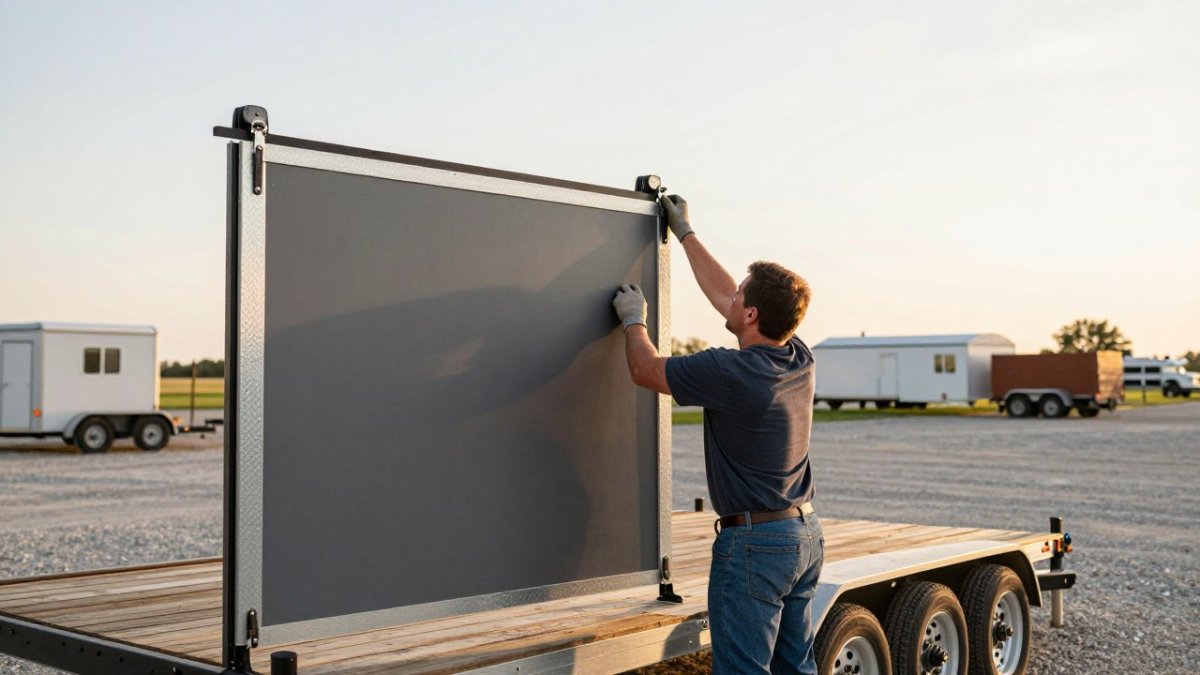
A standard ramp gate is the default rear access on most utility trailers, and for plenty of owners it works fine. But it stops working the moment the gate gets heavy, the cargo gets taller than the gate, or the truck bed sits too close to the trailer for the gate to fold flat.
At DoubleTake Trailer Sales, we talk with contractors, farmers, and weekend haulers every week who are tired of wrestling a full-width gate just to load a mower. The complaints repeat: the gate is heavy to lift, it eats deck space when folded, and it blocks access when you are carrying something that will not roll up a ramp at all.
That is where ramp gate alternatives come in. This guide breaks down the real options, what each one costs you in weight, money, and effort, and how to pick the right rear access for your cargo.
Slide-In Trailer Ramps: Removable Loading Without a Full Gate
Slide-in trailer ramps are removable ramp sections that hook onto the rear of the trailer for loading, then pull out and stow when the job is done. Instead of one wide gate, you get two narrower ramps you place where you need them.
For loading a zero-turn mower, an ATV, or a pair of wheeled carts, slide-in ramps do the job without leaving a full-width gate standing in the way.
The trade-off is handling. You carry the ramps to the trailer, set them, then stow them after. Many owners slide them into a dedicated rack under the deck or against the side rail.
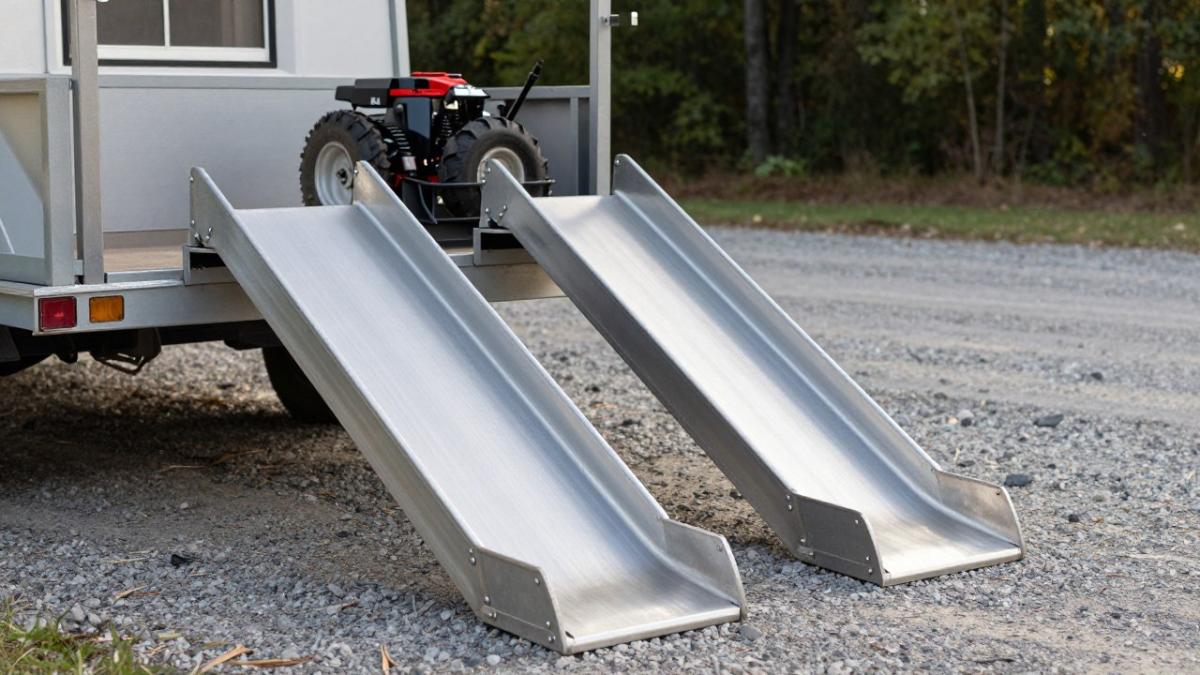
Best for: Owners who load wheeled equipment regularly and want the deck clear when they are not loading. Skip if: You mostly load by hand or need a surface wide enough to walk up beside a machine.
Bi-Fold Trailer Ramp: Half the Footprint, Same Loading Angle
A bi-fold trailer ramp folds at a hinge near its midpoint, so the gate collapses into roughly half its deployed length. You still get a full ramp surface to roll equipment up, but the folded gate takes up less space behind the trailer and is easier to lift.
The catch: a bi-fold gate still hangs off the rear of the trailer when folded. If your truck tailgate and the trailer gate compete for the same space, a bi-fold helps but does not solve it entirely.
Best for: Owners who want a full-width ramp but a smaller folded footprint. Skip if: You need the gate completely out of the way when loaded.
Utility Trailer Steps: Safer Access for People and Equipment
Utility trailer steps replace or supplement the ramp for anyone who climbs on and off the deck rather than rolling equipment up it. A set of bolt-on steps at the rear corner gives you a stable foothold for checking straps, loading by hand, or stepping up into an enclosed trailer.
Steps shine for hand-loaded cargo: lumber, bagged material, tools, and anything you carry rather than roll. They also help on trailers where the deck sits high and hopping up is a knee-jarring stretch.
What steps do not do is replace a ramp for wheeled equipment. You still need a ramp or gate to roll a mower or ATV aboard. Many owners pair steps with slide-in ramps: ramps for the machine, steps for the person.
Best for: Hand-loaded cargo and owners who climb on the deck often. Skip if: Your main job is rolling heavy wheeled equipment aboard.
Utility Trailer Gate Replacement: Retrofits, Spring Assists, and Split Gates
Utility trailer gate replacement covers three paths: swapping the gate for a different design, adding a spring assist to the gate you have, or moving to a split gate that opens in sections.
A spring-assist gate kit is the cheapest path. Aftermarket spring-assist kits are one way to reduce the lifting effort of a heavy gate. Follow the manufacturer's install instructions closely, since spring tension must suit the gate's weight.
A split gate divides the rear opening into two panels, so you can open one side for a person or a narrow load and both for a machine.
Full gate replacement makes sense when the existing gate is bent, rusted at the hinge, or simply the wrong design for how you load. If you are sourcing hardware for the swap, our guide to essential trailer parts for regular maintenance covers the hinges, springs, and gate hardware worth having on hand.
Best for: Owners keeping their current trailer but fixing a gate that is too heavy or the wrong design. Skip if: The trailer itself is due for replacement.
Payload, Axle, and Tongue Weight: What Rear Access Adds to the Load
Every rear access option adds weight, and that weight counts against your trailer's payload rating before you load a single tool. The useful way to compare options is not by sticker price but by pounds added to the trailer and where those pounds sit relative to the axles.
Start with the trailer's gross vehicle weight rating (GVWR) and its curb weight. Payload capacity is GVWR minus curb weight.
Weight placement matters as much as total weight. When you roll a mower or ATV up last, the load sits over or behind the rear axle. That shifts weight backward, lightens the tongue, and can cause sway at highway speed.
Access hardware also changes axle loading. If you are adding rear access weight and want to confirm your axle can carry it, our article on identifying reliable trailer axle brands walks through how to read axle ratings. And once the load math changes, it is worth reviewing how to tow a heavy contractor trailer safely before your next job.
Watch out: adding ramps, steps, or a heavier gate without rechecking tongue weight can push a previously stable trailer into sway, especially with a half-ton tow vehicle and a rear-loaded machine.
Best for: Anyone adding ramps, steps, or a heavier gate to an existing trailer. Skip if: You already know your setup is well under its ratings and your tongue weight is verified.
Dimensions, Traction, and Storage: Matching a Ramp to Your Trailer
Measure before you buy. A rear access option that is an inch too narrow or a foot too short is worse than the gate you replaced.
Deck width and ramp width. Measure the inside width between your trailer's side rails, then measure the track width of your widest wheeled equipment (outside of tire to outside of tire).
Ramp length and loading angle. Deck height drives how much ramp length you need. A longer ramp gives a gentler approach angle, which matters for low-clearance equipment and for machines that scrape on a steep incline.
Hinge locations and ground clearance. For folding and split gates, confirm the hinge line sits above the trailer frame and that the folded gate clears your tow vehicle's tailgate and hitch when hitched.
Traction and retention. Aluminum ramps can get slick when wet or muddy. Look for punched or raised traction surfaces, and keep the ramp clean.
Storage and stowage. Slide-in ramps need a rack or a spot against the rail. A bi-fold gate needs clearance behind the trailer.
| Option | Weight Impact | Effort to Use | Storage Needs | Best Cargo |
|---|---|---|---|---|
| Slide-in ramps | Light to moderate | Set up and remove each time | Rack or side rail | Wheeled equipment |
| Bi-fold gate | Moderate | Lift and fold | Hangs on trailer | Mixed loads |
| Split gate | Moderate | Open one or both panels | Hangs on trailer | People and equipment |
| Steps | Light | None, fixed | None | Hand-loaded cargo |
| Spring-assist gate | Adds to existing gate | Reduced lift effort | None, stays on trailer | Existing heavy gates |
Watch out: a ramp that is long enough but not retained can slide off the trailer edge mid-load; always verify the hook or pin engagement before driving a machine up.
Choosing Your Rear Access Setup at DoubleTake Trailer Sales
The right answer depends on what you load and how often. Frequent wheeled equipment points to slide-in ramps or a bi-fold gate. Hand-loaded cargo points to steps. A gate that is simply too heavy points to a spring-assist kit first.
We are a locally-owned dealership established in 2010, and we build custom trailers to customer specifications as well as offering in-stock inventory. Our in-house service and parts department supports customers with trailer parts and service, and we offer no credit check financing options.
Before you configure, our heavy duty trailer pricing guide explains what drives cost so you know where rear access fits in the budget. And if you are still weighing trailer styles, our roundup of the best utility trailers for small contractors is a good next read.
Rear access is one of those choices that seems small until you are wrestling a gate every morning. Get it matched to your cargo and your loading habits, and the trailer stops being a chore. DoubleTake Trailer Sales can walk you through slide-in ramps, bi-fold gates, steps, and spring assists, then build or source the setup that fits your trailer and your budget, backed by our parts and service department.
Frequently Asked Questions
What can I use instead of a ramp gate on a utility trailer?
The main ramp gate alternatives are slide-in trailer ramps, bi-fold gates, split gates, and utility trailer steps. Slide-in ramps are the most common retrofit because they store flat and leave the rear open when removed. Bi-fold gates cut the deployed footprint roughly in half. Steps suit people and hand-loaded cargo more than wheeled equipment. A spring-assist kit is the cheapest option if you want to keep your existing gate but make it easier to lift.
Are slide-in trailer ramps better than a trailer ramp gate?
They solve different problems. Slide-in ramps win when you want an open rear for long cargo, when you load one machine at a time, or when gate weight is straining the tail of the trailer. A ramp gate wins when you load often and want one motion: drop the gate, drive on. Ramps must be carried and stored separately, and they can be misplaced. If you load daily, the gate usually stays; if you load occasionally and haul mixed cargo, ramps often make more sense.
What is the difference between a bi-fold ramp and a standard ramp gate?
A standard gate folds down as one full-width panel, so it needs clear space behind the trailer equal to its full length. A bi-fold trailer ramp folds at a hinge partway up the panel, so the deployed ramp is shorter and the folded gate sits higher at the rear. That helps in tight driveways and on job sites where you cannot back up to open ground. The trade-off is more hinge points to inspect and keep lubricated.
Are trailer steps a practical alternative to a ramp gate?
For people, yes. Utility trailer steps give a stable foothold for climbing in and out, which matters for enclosed trailers, concession units, and anyone loading by hand. They do not replace a ramp for mowers, ATVs, or other wheeled equipment. Many owners run both: steps at the side or rear corner for access, and a ramp or gate for the machine. Check that the steps clear your coupler and jack when folded.
How do I choose ramps that fit my utility trailer?
Measure three things: the trailer deck height, the rear opening width, and the length of the longest wheelbase you plan to load. Ramp length sets the loading angle, and a shallow angle matters most for low-clearance equipment. Confirm the ramps' rated capacity covers the machine plus the rider, and check that the attachment style matches your trailer's rear rail or pockets. Bring your trailer measurements to a dealer so the ramps and gate hardware are matched to the trailer, not guessed.
